Meet Carla: Mahwah Principal
Posted: October 23, 2026 | Written By: Drew Delligatti | Category:
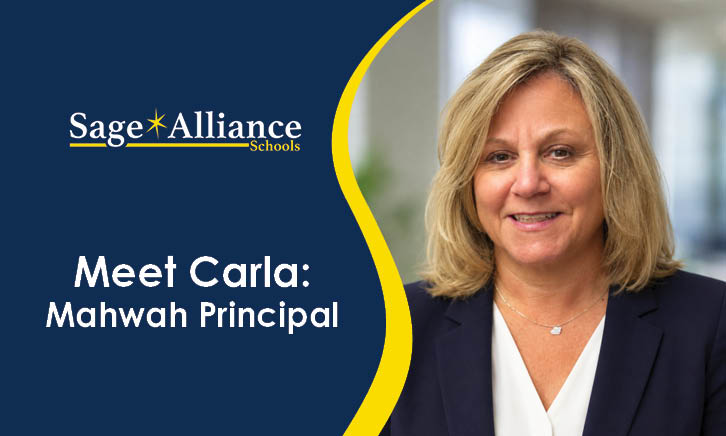
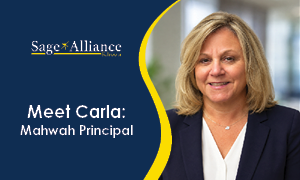
Carla Alvarez is stepping into her first year as Principal of our Mahwah school. A proven leader and innovator, Carla is looking forward to bringing her data-driven approach to Sage Alliance and providing students with a supportive, caring culture.
Can you talk about your career trajectory and what led you to where you are now?
After completing student teaching at Paramus High School, I officially started my teaching career in 1990 as a special education teacher in a self-contained program for students with perceptual impairments at East Brook Middle School. I earned my master's degree in special education and my Learning Disabilities Teacher-Consultant certification along the way. Then I taught in a self-contained program for students with emotional disabilities at Paramus High School, where I built a computerized behavior modification system tied to therapeutic goals. I obtained a second master's degree in educational technology and earned my supervisor and principal certifications through an educational leadership program.
That experience led me to design the Paramus Alternative Cooperative Education (PACE) Program, a therapeutic program for students with social-emotional needs. From there I moved into leadership as vice principal and eventually principal of West Brook Middle School, leading a school of over 800 students with inclusive and self-contained programs. I became director of human resources and then director of curriculum, supervision, and accountability. Every step has built on the one before, and what ties them together is my commitment to students who need more support to succeed. Sage Alliance feels like the place where all of that comes together.
What do you love most about working in special education?
I love watching a student discover that they can do something they have been told they can’t do. Special education asks you to look past labels and ask what a student is communicating and what they need. That's why identifying the function of student behavior has been such a focus of my professional development. It's deeply relational work, and it works best when teachers, clinicians, families, and students are all pulling in the same direction. After thirty-six years, that's still what motivates me.
What makes Sage Alliance special?
What draws me to Sage Alliance is the integrated approach. Social, emotional, and academic growth are treated as one mission rather than competing priorities. Cultivating an environment that is small, safe, therapeutic, and challenging is important. Students facing mental health challenges deserve real academic rigor, not just support, and they can only reach it when they feel safe. I also admire the collaborative model, which aligns with how I've always worked—through advisory programs, professional learning communities, and differentiated instruction, with clinical and educational staff working as one team.
How would you describe your leadership style?
Collaborative, supportive, and grounded in data. I believe the people closest to students, such as teachers, aides, clinicians, and families, often have the best insight, so my job is to build structures that let them work well together. That means strong communication, clear expectations, and regular coaching and feedback. I've led Intervention & Referral Services teams, 504 committees, and Child Study Teams, and I know that a multidisciplinary team only works when everyone feels heard.
I also hold high standards for compliance, safety, and accountability, which comes from my experience as an HR director, anti-bullying coordinator, and curriculum leader. I lead with passion and compassion and follow through on the details.
What is your vision for partnering with districts and families?
Student success depends on coordinated effort among all stakeholders. I see partnership as the foundation of the work rather than an add-on. With families, that means open, frequent, two-way communication so they hear from us about progress, not just problems. With districts, it means being a reliable, transparent partner: clear on IEP implementation and compliance, responsive when questions arise, and focused on a smooth path for students, whether they are working toward returning to their home district or toward a successful next step.
What does success look like over the next year?
In the first year, I'll focus on a few things:
- Relationships: Getting to know students, families, staff, and sending districts so people feel heard and trust the campus's direction.
- Culture: A school where students feel safe, staff feel supported, and where trauma-informed, therapeutic practices are consistent across classrooms.
- Staffing and development: Recruiting and retaining educators who combine strong teaching with emotional intelligence, and giving them meaningful, ongoing professional development.
- Outcomes: Using data to track both academic progress and social-emotional growth, so we can show students, families, and districts that the model works.
- Compliance and operations: Strong IEP implementation, a well-managed budget, and smooth day-to-day operations.
Success looks like students who are more engaged and confident, families who feel like partners, and staff that want to continue their own learning and growth to better support their students.
What is a fun fact about you?
I student taught and then started my career in 1990 and spent my whole career in one district, so I've watched students I taught grow up and come back as adults with their own children in our programs.
Want to be notified of new articles and resources from Sage Alliance? Click here to submit your email and opt into our newsletter.